



We apologise but there was a problem sending your message. Please contact customer support at [email protected]
Our educational philosophy is rooted in the belief that learning should not only be comprehensive, but also transformative; shaping students into well-rounded, informed, and conscientious individuals.
Our Academic Philosophy
Welcome to the academic world at Saint John the Baptist Middle School. All of our classes form students to be REAL: Responsible citizens, Effective communicators, Active Christians, and Life-long learners. SJBMS utilizes a variety of methods of instruction to support learning. One such way is the utilization of blended online education in collaboration with ASU taking part in the State Online Education Program (SOEP). With the combination of technology, literature, science and foundational Catholic values, our students learn and grow to make valuable contributions to our world.
We encourage critical thinking and problem-solving, while also nurturing a deep sense of ethical responsibility and global awareness.
6th Grade Course Catalog
Saint John the Baptist Middle School
6th Grade Course Descriptions (25-26)
Core and Required Courses:
Academic Literacy: This required semester course supports sixth grade students in their writing and organization as they begin their middle school career at SJBMS. Students will develop practical skills around communication, time management, and self-management as well as comfort with the demands of a rolling block schedule. In addition to lessons on note-taking and communicating with teachers, the curriculum for this course includes a research project on sleep management, an extended review of revision and editing rules in academic writing, a project on 6th grade ELA standards for personal narratives, and a summative presentation on the 7 Habits for Highly Effective Teens. This is a semester class.
Exploratory: Students will explore a variety of courses that reinforce the content of core classes. They will explore 4 units throughout the year:
- Academy Awards of Books: Lights! Cameras! Action! Students will read a captivating book and discuss it in a literature circle format. Students will participate in engaging projects that help enhance their understanding of literary elements. Students will then watch the movie to compare and contrast this exciting book with the motion picture. This class will help students with comprehension, writing skills, speaking skills and much more.
- Current Events: Students will develop their media literacy skills through analyzing the authors, claims, and evidence of digital and printed media, such as videos, newspapers, and social media posts. Students will then use this practice to learn about and discuss specific topics within current events, including immigration, democracy, racism, and climate issues. Through this course, students will develop a critical lens of the world around them, expanding their understanding of pressing issues impacting the United States and the broader world community.
- Family Life and Health: This course will provide students the opportunity to learn about a variety of health issues which include the following: developing strategies for appropriately and safely expressing emotions, practicing ways of showing respect for self and others, reinforcing the importance of healthy behaviors by learning about nutrition, disease prevention, and consequences of substance abuse.
- Robotics: In this course, students will utilize the LEGO® SPIKE ™ Prime robot set to resolve a problem related to space science. Students will be part of a team that will use STEM to find a solution for their scientific problem. Teams will build LEGO® missions, design their own mat, and learn to program their robots to perform a series of tasks using the robot software program. Critical thinking skills, as well as creativity, will be used as students work together to solve their problem.
Language Arts: This course follows the Utah Core Standards , consisting of study in the areas of grammar, usage, and mechanics. Students will learn and practice analyzing, interpreting, and writing logically - developing the basic writing skills of sentence structure, development and organization of paragraphs, and revision using the MLA guidelines. Students will be introduced to the areas of analytical and critical writing. Students will use critical thinking, reasoning, and inference skills during class discussions of a variety of works of literature. Students explore nonfiction and fiction selections including novels, short stories, and poetry. Students will engage in an extensive research and writing process. Additionally, students will take part in blended online learning, taught in conjunction with Arizona State University, ASUPrepDigital and the Utah State Board of Education.
Math
- Foundations: This is an intensive math intervention program designed to accelerate striving students toward grade-level proficiency. Students benefit from working in small groups with the teacher as well as independently using a self-paced software program (ALEKS).
Topics covered in this course include developing fluency with the addition and subtraction of fractions, understanding the multiplication and division of fractions in limited cases, and extending division concepts to two-digit divisors. Students will also integrate decimals and fractions into the place value system, develop an understanding of operations with decimals, build fluency with whole number and decimal operations, and gain a deeper understanding of area and volume. This course is designed for 6th, 7th, and 8th-grade students below grade-level expectations. There is an assessment score required to be enrolled in this class.
- Intermediate: Students will be reviewing foundational topics for middle school mathematics. Students will continue to expand and enhance their knowledge of math vocabulary, grow in problem-solving skills, work with word problems, perform operations with rates and ratios, fractions, decimals, and percentages, compute with multi-digit numbers, and work with integers, rational numbers, and the coordinate plane. This course is designed for 6th, 7th, and 8th-grade students below grade-level expectations. There is an assessment score required to be enrolled in this class.
- Math Course 1: Students will be reviewing and expanding their knowledge of math vocabulary, performing operations with integers, fractions, decimals, percentages, solving equations, using geometry, measurement, data analysis, problem solving, and graphing. Students will represent and solve mathematical situations with algebraic symbols. There is an assessment score required to be enrolled in this class.
- Math Course 2: This course is a transitional math class designed to prepare students for Pre-Algebra. Students will build on skills acquired in Course 1 and be introduced to new algebraic concepts. There is an assessment score required to be enrolled in this class.
- Math Course 3: This course is a preparatory course for Algebra. It includes review of basic operations with integers, decimals, and fractions, solving multi-step equations and inequalities, use of square roots and exponents, basic graphing concepts on the coordinate plane, and an introduction to geometry, including perimeter area, surface area, and volume. There is an assessment score required to be enrolled in this class.
Religion: Students will explore the Old Testament. They will follow the stories of the Chosen People while reading, studying and reflecting on excerpts from the Pentateuch, historical, prophetic and wisdom Literature. Students will gain a deeper understanding of the sacraments, the liturgical year, moral topics and the lives of the saints. Finally, they will grow in their experience of different forms of prayer, including the devotion of the Holy Rosary.
Science: The curriculum focuses on life sciences including cell biology, heredity, evolution, and ecology. Students will start the year with STEM activities to give them the background knowledge of the science and engineering practices which will be utilized throughout the year in our class. Each 6th grade student will use these practices and participate in the school science and engineering fair held in January. Throughout the year, the students will be involved in all of the following: science and engineering labs/experiments, projects, daily starters, critical thinking tasks, STEM activities, memorization, reading informational texts, taking notes, and writing activities.
Social Studies: In this course, students will study world history, progressing chronologically with the earliest civilizations of the Fertile Crescent, and ending with studying the Middle Ages in Europe and Africa. Each unit will focus on the geography, religion, achievements, politics, economics and social structure of the civilization under study. Throughout the year, the students will develop their skills in reading, writing, geographic literacy, cultural awareness and critical thinking. Students will start thinking like historians, by critically examining sources of information, identifying claims and evidence, and crafting arguments for CER (claim, evidence reasoning) paragraphs and DBQ (document based questions) assessments. The practice of historical writing, discussion, and analysis will support students as they progress in future humanities courses. [SOEP course and content]
6th Grade Electives:
Art: This is a beginning course to introduce students to the many different types and styles of art. The class focuses on the five elements of art, which serve as the foundation, or building blocks, of creating artwork. After learning basic vocab and art history, as well as different mediums and styles, students will then create their own masterpiece; providing an overview of visual arts while studying a broad variety of art tools and materials. Students will learn how to understand and create meaning in art, as well as learn to discuss and critique art constructively and with confidence.
Computer: This course is an introduction to computer technology that will help 6th grade students acquire basic computer skills that will benefit them throughout their personal and professional lives. Students will learn and have a basic understanding of word processing, spreadsheets, presentations, how computers work, block coding, and keyboarding skills. This is a project-based elective that strives to reinforce and incorporate core curriculum standards into a technology-based course of study. Expect to learn a lot and have fun doing it! This is a semester course.
Dance I: This course is designed to introduce students to the world of dance as an art form. Students will investigate many styles of dance including jazz, ballet, hip-hop, modern, and contemporary. Students will develop their cardiovascular endurance, technique, flexibility, and coordination. Students will learn the tools of choreography and compose their own dance with a group of their peers. Students will learn performance techniques and have the opportunity to perform in a concert at the end of the semester. This is a semester course.
Dance II: This course is designed for dancers who have had previous training in dance. Students will investigate many styles of dance including jazz, ballet, modern, hip-hop, and contemporary. Students will continue to develop their technique, cardiovascular endurance, flexibility and coordination. Students will learn the tools of choreography and compose their own dance with a group of their peers. Students will learn performance techniques and have the opportunity to perform in a concert at the end of the semester. This is a semester course. Contact Isabel Keetch [email protected] for approval.
Music: Organized into different musical areas
Band (Beginning): Students in Beginning Band will choose from either a woodwind or a brass instrument. No experience is required. Students will learn the fundamentals of music, sight reading of notes and rhythms, and the basics of ensemble playing. They will be exposed to a variety of styles of music and will perform at least once per semester at a concert. This is a yearlong course.
Band II (Intermediate): The SJBMS Intermediate Band is for students with at least one year of experience on their instrument. Students that have completed a year of beginning band in either 5th or 6th grade are invited to request this course. Students with less than one-year experience or outside experience through private instruction can audition to join the group with instructor permission. We will continue to refine musicianship and explore more complex literature in this course. We will also perform in Jr. High School festivals in our area. This is a yearlong course.
Choir: The Middle School Choir is an ensemble of 6th, 7th and 8th graders who present concerts and public performances in addition to leading music at school and parish Masses. Students will learn to read a vocal score, learn basic music theory lessons in note-reading and rhythm, and will exercise proper vocal production and breathing techniques. With exposure to a broad range of musical genres and frequent performance opportunities, students will deepen musical appreciation and develop skills necessary for public presentation. Students will also work on pieces to present for a festival competition during spring semester. This is a yearlong course.
Orchestra I (Beginning): This class is for any 6th, 7th, or 8th grade student who is new to stringed instruments or who would like reinforcement or review. The class offers instruction on one of four instruments: violin, viola, cello, or double bass. In this class, students will learn to read notes and rhythms, play with correct posture, and have good tone production. Students will learn to play together as one while following the conductor. It is required that the student purchase a book and provide their own instrument, especially for practicing at home. SJBMS can provide a limited number of cello and bass instruments for in-school use. By the end of the course, students will be prepared to take Orchestra II. Orchestra I students will perform in approximately 2 concerts per semester. This is a yearlong course.
Orchestra II (Intermediate): This class is for any 6th, 7th, or 8th grade student who has experience on the violin, viola, cello, or double bass. As the music in this class is more advanced, students who take this course must already have a basic understanding of note and rhythm reading skills. In this class, students will build on Orchestra I knowledge and continue to refine playing skills as an individual as well as a group. Students will learn new techniques to expand their musical abilities including new bow styles, shifting, and vibrato through a variety of classical, modern, pop, and movie music. Orchestra I students will perform in approximately 2 concerts per semester. This is a yearlong course.
Percussion I (Beginning): This class is designed to introduce students to the world of percussion. Students will learn proper snare drum and mallet technique and will be introduced to a variety of concert and ethnic percussion instruments. Students will develop their skills in reading notes and rhythms. Students will perform with the Band I class as well as perform music that is specific to percussion. Students are required to provide their own Percussion Kit including Bells, Snare Pad, Sticks, and Mallets. This is a yearlong class.
Physical Education (PE): This course presents physical education as a lifetime commitment. It is designed to be a wide variety of lifetime sports and games experienced by the students. All students will understand in greater detail the function of the body, understand the nutrition required by a healthy body, understand the difference between anaerobic and aerobic training, apply movement concepts and principles to enhance motor skill development and develop knowledge of the rules and strategies of various games and sports. This is a semester course.
Spanish I: In this course students will begin their exploration of Spanish through speaking, reading, writing and listening in the present tense. Topics include describing characteristics of people, what activities people enjoy, schedules for activities and classes, what people like to eat and drink, and where people like to go. This is a yearlong course.
7th Grade Course Catalog
Saint John the Baptist Middle School
7th Grade Course Descriptions (26-27)
7th Grade Core Subjects (year-long courses)
In addition to core level ELA, each 7th grader is expected to complete an ELA elective course. ELA elective courses can be found under “Electives” and marked with an asterisk.
Language Arts: In this course, students will explore short stories, poetry, and novels will be analyzed for the author’s purpose, themes, use of literary techniques and figurative language. Class novels we will study include The Giver and The Outsiders. In response to both literature and nonfiction articles, students will journal, use critical thinking skills to answer both short and long form essay questions, and write argumentative paragraphs and essays, and defend arguments in oral presentations. There will be a yearlong focus on expansion and improvement of students’ vocabulary using Membean. Grammar will also be emphasized as part of the vocabulary program. Students will be encouraged to be active participants in class discussion on class novels and other works. This course is intended to teach students the concepts set forth by the Utah Common Core Standards in 7th grade Language Arts. This class is intended to not only help the student read more fluently but also to help them to better comprehend the material and make their own conclusions from their interpretations. From those interpretations, they will also be developing their oral and writing skills focusing on Argumentative, Explanatory, and Narrative writing. [CCE course and content]
Literature and Composition: This class is an advanced 7th grade level course; enrollment in this course is based on student grades, Star reading scores, class performance, teacher recommendations and admin approval. and the completion of summer reading. Short stories, poetry, and novels will be analyzed for the author’s purpose, themes, use of literary techniques and figurative language. Class novels we will study include The Book Thief and The Outsiders. In response to both literature and nonfiction articles, students will journal, use critical thinking skills to answer both short and long form essay questions, and write argumentative paragraphs and essays. There will be a year-long focus on expansion and improvement of students’ vocabulary using Membean. Grammar will also be emphasized as part of the vocabulary program Students will be encouraged to be active participants in class discussion on class novels and other works. This course is intended to teach students the concepts set forth by the Utah Common Core Standards in 7th grade Language Arts at an accelerated level. Instruction will be focused on developing quantitative reading, and qualitative reading. This is intended to not only help the student read more fluently, but also to help them to better comprehend the material and make their own conclusions from their interpretations. From those interpretations, they will also be developing their oral and writing skills focusing on argumentative, explanatory, and narrative writing. [CCE course and content]
Religion: The four Gospels are at the heart of all Scripture and present God’s saving action in the life, death and Resurrection of Jesus Christ. Students will learn from these Gospels, exploring these pieces from literary, historical, and theological points of view. This course is both writing and reading intensive, guiding students to not only a deeper understanding, but also a greater appreciation of the Christian Gospels and their impact on the world. Students will also be responsible for outside work on Canvas as part of their grade in this course. Families interested in the sacrament of Confirmation should consult their local parish for acceptable Confirmation preparation.
Science: This science course will introduce students to topics in many different disciplines of earth science including geologic time scale, the cycling of Earth’s materials and the flow of energy that drives this process; the change of the earth’s surface over time, distribution of fossils and rocks, continental shapes, and seafloor structures, the cycling of water through Earth’s systems, motions and complex interactions of air masses, causes and patterns of atmospheric and oceanic circulation. Earth’s mineral, energy, and groundwater resources in relation to geoscience processes, natural hazards and the forecasting of catastrophic events, human population over time, conservation and use of natural resources. Students will plan and investigate experiments using the principles of experimental design, C/E/R (claim, evidence, and reasoning), and use their problem-solving skills.
Honors Science: 7th Grade Honors Science is a class for highly motivated students who have demonstrated excellent study skills and high aptitude in science, and who have committed to pursuing the study of science at greater depth and complexity than a typical 7th grade earth science class.
All Honors Science students are required to participate in the Diocesan Science Fair, which is held on a Saturday. There is a participation fee; however, financial assistance is available for families who need support. If a student is unable to attend the science fair, an alternate assignment of comparable rigor will be required.
This science course will introduce students to topics in many different disciplines of earth science including geologic time scale, the cycling of Earth’s materials and the flow of energy that drives this process; the change of the earth’s surface over time, distribution of fossils and rocks, continental shapes, and seafloor structures, the cycling of water through Earth’s systems, motions and complex interactions of air masses, causes and patterns of atmospheric and oceanic circulation. Earth’s mineral, energy, and groundwater resources in relation to geoscience processes, natural hazards and the forecasting of catastrophic events, human population over time, conservation and use of natural resources. Fundamental knowledge such as the use of scientific investigation through experimental design, C/E/R (claim, evidence, and reasoning), and incorporating data interpretation/analysis are used extensively.
Independent research and scientific inquiry are important components of Honors Science. Projects, exams and other assignments will require more critical thinking and problem solving than regular 7th Grade Science.
Social Studies: This course is the study of Utah history. Students will focus on political, economic, geographic, social events and issues related to this subject. Primary and secondary sources are utilized, along with current events in a historical context to give students a better understanding of Utah studies and how it relates to their lives and the world today. This course will be incorporating blended online learning materials, and utilizing course content from various learning sources.
Honors Social Studies: Honors seventh grade social studies students are given an opportunity to study Utah studies alongside the first half of United States history at a faster pace. Honors Social Studies is a rigorous course designed for students with an interest in pursuing an in-depth study of historical concepts in order to possibly move on to advanced and/or St. John’s Academy classes. Students can expect to engage in higher levels of critical and analytical thinking. Students will progress quickly through the units, which will involve more note taking during class lectures. Lastly, there will be multiple writing and reading assignments, which will deepen a student’s knowledge in regards to the historical content being presented.
Electives:
In addition to core level ELA, each 7th grader is expected to complete an ELA elective course. ELA elective courses can be found under “Electives” and marked with an asterisk (*).
Anatomy and Physiology: In this semester-long elective, students will develop an understanding of the relationships between the structures and functions of the human body. The curriculum provides a basis for students to develop a conceptual understanding of the following human body systems: skeletal, muscular, nervous, cardiovascular, respiratory, digestive, and urinary. Students have the opportunity to integrate that knowledge through inquiry-based activities and laboratory investigations.
Art: Is organized into the following areas:
- Drawing: This course is an introductory class for students who are new to art. With an emphasis on drawing from life, this is a skill building class where students will learn basic drawing skills and principles, as well as different ways to “see” and go about the drawing process while experimenting with different styles and drawing mediums. The class will learn how to understand and create meaning in art, and be exposed to some of the great masterpieces of art history. Students will learn to discuss and critique art constructively and with confidence. This is a semester course.
- Illustration: This course is an introductory class for students who are new to art. Illustration introduces students to the concept of using art as a means of storytelling. From creating characters to illustrating narratives and text, students will learn skills to become creative problem solvers while studying a broad variety of art tools and materials. The class will learn how to understand and create meaning in art, and be exposed to some of the great illustrations of the past and present. Students will also learn to discuss and critique art constructively and with confidence. This is a semester course.
- Painting: This course is an introductory class for students who are new to art. With an emphasis on wet media and color, this is a skill building class where students will learn basic painting skills. Students will have the opportunity to create artwork using many different mediums and in many different styles. The class will learn how to understand and create meaning in art, and be exposed to some of the great masterpieces of art history. Students will also learn to discuss and critique art constructively and with confidence. This is a semester course.
- Art II: Art II is an advanced course for students who want to expand their knowledge of art by continuing to develop their drawing and painting skills, as well as work with new and different mediums of art. With an emphasis in studio production, students will be using the principles and elements of art and design, different styles, and new processes to create art with meaning, perspective, and good composition. Students will further their knowledge of aesthetics, art history, and constructive art criticism. Drawing, Painting or Illustration is a prerequisite. There is a $15 class fee. This is a semester course.
Communication Studies: Communication Studies is an elective course for 7th and 8th graders who have an interest in interpersonal and intercultural communication, public speaking, and argumentation. In this course, students will improve their listening, critical thinking and communication skills. Students will learn about the power of verbal and nonverbal communication. This class will also provide students with skills in teamwork, problem solving, leadership, and conflict management. This is a semester course.
Computer Coding: Middle School Computer Coding is a course that introduces early secondary students to computer basics, programming, and web design. The course is designed to be attractive to a diverse range of students, from those with a coding/computer background to those who have never considered programming. Students will have the opportunity to program using Block Code with Spheros. Students will also create web pages and learn about computer basics. This is a semester course.
Computer Design, Creation and Coding: Computer Design, Creation, and Coding is a course that takes early secondary students on a deeper dive into computer aided and engineering design, construction, 3D modeling and printing, and programming. During this course, students will continue their coding education by programming real-world objects such as Arduinos (micro-controllers) and developing algorithms by creating interactive games. This course is a perfect introduction to the disciplines and skills expected within the high school level courses, including Introduction to Innovative Technology. This is a semester course.
Consumer Studies: This elective provides students with the knowledge and skills to prepare students for everyday life as an adult. The course topics are: basic sewing, finances/budget, nutrition, and cooking. The course has numerous lab activities that teach these practical skills in fun and creative ways. There is a $15 materials fee for this semester course.
*Creative Writing: Creative Writing is an advanced elective typically intended for high school but modified for middle grades. Students will complete curriculum units to show mastery over a concept, then extend their knowledge to individual creative projects that apply the concept. Units covered include personal narratives, short stories, poetry, writing for children, writing for screen, and many others. This is a semester course.
Dance: Is organized into three areas:
- Dance I: This course is designed to introduce students to the world of dance as an art form. Students will investigate many styles of dance including jazz, ballet, hip-hop, modern, and contemporary. Students will develop their cardiovascular endurance, technique, flexibility, and coordination. Students will learn the tools of choreography and compose their own dance with a group of their peers. Students will learn performance techniques and have the opportunity to perform in a concert at the end of the semester. This is a semester course.(A nominal costuming fee may be required.)
- Dance II: This course is designed for dancers who have had previous training in dance. Students will investigate many styles of dance including jazz, ballet, modern, hip-hop, and contemporary. Students will continue to develop their technique, cardiovascular endurance, flexibility and coordination. Students will learn the tools of choreography and compose their own dance with a group of their peers. Students will learn performance techniques and have the opportunity to perform in a concert at the end of the semester. This is a semester course. A brief virtual audition video is required for this course. Contact Isabel Keetch [email protected] for approval. (A nominal costuming fee may be required.)
- Dance III: This course is designed for dancers who have had significant previous training in dance and are aiming to participate in a dance team environment in High School. Students will cultivate high levels of performance in many styles of dance including jazz, ballet, modern, hip-hop, and contemporary. Students will amplify their technique, cardiovascular endurance, flexibility and coordination. Students will apply the tools of choreography to a student lead piece to be performed in a concert at the end of each semester. Alongside dance skills, students will be exposed to student leadership opportunities as they prepare for High School dance teams. This is a year-long course. A brief virtual audition video is required for this course. Please send audition video material to Isabel Keetch [email protected] within two weeks of the course registration due date. (A nominal costuming fee may be required.)
- Hip Hop: Do you find yourself bobbing your head or tapping your toe when you hear music? If so, this semester's elective course is right up your alley. Students will explore this amazing street style of dance, both its culture and basic movements. Students will also have the opportunity to choreograph in small and large groups! The semester will end with a winter showcase performance- a one-night amazing concert for friends and family. This is a performance-based elective and daily active participation and dance concert participation are required. No previous dance experience is needed ~ both girls and boys are welcome. The more the merrier! Just Dance! (A nominal costuming fee may be required.)
Economic Survival: This is a financial literacy course where students will learn basic economic principles along with real world financial concepts. Students will learn not only about basic economic principles, but also about colleges, internships, careers, entrepreneurship, and digital citizenship throughout the semester. We will discuss careers, the cost of college, budgets, the stock market, checkbooks, debit cards, credit cards, retirement, mortgages, rent, utilities, insurance, and more. We will have financial experts come as guest speakers. By the end of the semester, students will have a working resume they can use for future use. This is a semester course.
Fashion and Interior Design: This course is designed for students to receive a basic overview of design principles. During the first half of the semester students will study Interior Design. They will learn about color, textiles, and the basic elements of design. Students will explore basic area planning and the functionality of space, lighting, furniture design, and home accessories. During the second half of the semester students will study Fashion Design. Students will study fashion fundamentals and fashion design principles. Each student will create his/her own fashion line and personal portfolios. Projects are an integral part of the learning process within this course, and will be heavily integrated throughout the semester. This is a semester course.
Fiber Arts and STEAM: Discover the beauty of combining the left brain and right brain to create textile art. Fiber or textile arts include weaving, knitting, crocheting, felting, embroidery, macramé, fabric printing, papermaking, basketry, and dying. Topics include how technology revolutionized the manufacturing of textiles, the process of creating and digitizing patterns, the textile applications of CAD programs and CNC machines, and the limitations of machines and AI and the necessity of the human touch. There is a $15 fee for this course. This is a semester course.
Food and You: Have you ever heard the saying “You are what you eat”? In this nutrition class students will learn the truth behind that saying. Students will explore the basics of nutrition including digestion, metabolism, and absorption of macro and micro nutrients. We will also learn how food choices can impact social, mental, physical well-being, other cultures' food choices, and so much more! Students will participate in multiple food labs where students get to make delicious healthy food. There is a $15 class fee. This is a semester course.
Forensics: Forensics elective offers a fun chance to survey a variety of different scientific fields within the context of crime. Students explore the science of criminology by using a combination of science disciplines. As students learn to differentiate between actual techniques and some of those portrayed on popular television shows, they evaluate current procedures used by real crime labs to understand some of the limitations of the law, police, and forensic science. Students examine scientific techniques behind the analysis of physical and eyewitness evidence, DNA fingerprinting, fire and explosives, bones, blood spatter analysis, handwriting and document analysis, and other relevant pieces of evidence. Throughout the course, students investigate crime and accident scenes, collect and analyze evidence, and develop observational skills and deductive reasoning. Many times, crimes will relate to mature subjects. Caution will be taken to keep the discussions of these events as age-appropriate as possible. This is a semester course.
*Global History of Sports: This elective course explores the historical development, cultural significance, and global impact of sports from ancient civilizations to the present day. Students will examine how and why humans have participated in games and competition throughout history, beginning with an introduction to the fundamental question: Why do humans play? This unit explores the social, psychological, and cultural purposes of sports, including competition, cooperation, identity, and entertainment.
The course then moves into an in-depth study of sports in early civilizations, highlighting traditions such as the Ancient Olympic Games, the Mesoamerican ball game, and athletic practices in ancient Rome and China. Students will analyze how these early forms of competition was closely tied to religion, politics, and cultural values.
In the third unit, students will investigate the emergence of modern sports during the 19th and early 20th centuries, focusing on the standardization of rules, the formation of organized leagues, and the development of structured competition. This includes an overview of major professional organizations and the systems that govern modern athletics.
The course also examines the globalization of sports, with particular attention to international competitions such as the FIFA World Cup, WBC, World Cup of Hockey, etc. In both written and oral assessments, students will evaluate how media, technology, and international exchange have contributed to the worldwide popularity of sports and the creation of global fan communities and rival nations/teams.
Finally, students will explore the relationship between sports and society, analyzing how athletics connect with issues such as race, gender, politics, and economics. Through case studies and discussion, students will consider how sports both reflect and influence broader social change. This is a semester course.
*Great Books and Movies: Which version is the best: the book, or the movie? As a class, we will select both classic and contemporary novels that were made into movies and discuss the differences between the two. Additionally, this course will focus on writing skills development by requiring formative assessments in note taking and discussion, and summative assessments in various forms including but not limited to: movie reviews, compare-contrast essays, descriptive expository essays, and film analysis essays. Students should prepare for a busy and engaging experience of reading and writing a great deal. They also have a list of novel and movie pairings that they would suggest for the class on the first day it meets. This is a semester course.
Inventions Throughout History: This course will explore the important inventions that have impacted civilization throughout history. From the Paleolithic Era to the Modern Era, students will learn about patents, and more. Students will research an inventor and create their own invention in a culminating project. This is a semester course.
*Latin & Greek Root: This class encourages students to look at words as members of families in the way astronomers see stars as parts of constellations. Here students will become acquainted with constellations of words descended from Greek and Latin, visible in families that cluster around such subjects as the human being, kinds of mental activity, and aspects of daily life. This class will help students with increasing student recognition of words through these roots especially in science and math classes. This is a semester course.
Marine Science: Students will learn about the marine environment through the study of marine ecology, biology, and chemistry, as well as investigate human interactions with marine ecosystems and the cultures and communities that are closely connected to oceans and seas. This course will involve frequent group labs and projects, and exploration through stations which will allow students to practice their scientific investigation skills. This is a semester course.
Mind Benders: Do you enjoy brain teasers, solving puzzles, and challenging yourself? Students will have many opportunities to “bend” their minds. Students will complete logic puzzles, learn number tricks, learn and play a variety of games, and participate in hands-on activities including 3D puzzles and Rubik’s cubes. Come challenge yourself and have some fun too! This is a semester course.
Mindful in the Middle: Come unplug with us! This class explores how to become more mindful in middle school. Students will have a chance to unplug from technology and enhance their social-emotional learning. Students will utilize guided meditation as well as engaging mindful exercises to become more present. Being mindful can help students reduce stress, be present, and cultivate a curiosity towards their thoughts and emotions. This is a semester course.
*Mock Trial: (Introduction to Mock Trial) This fall semester introductory course will give students the opportunity to learn about the Judicial Branch of the United States government. Students will discover how this branch operates in order to interpret our laws. This will include topics such as the court system, the appeals process, and trials. The main focus of this course will be learning how to prepare for and participate in a criminal or civil trial. During a Mock Trial, students perform all the parts of a trial, including attorneys, witnesses, and the bailiff. This course is designed to build and develop public speaking skills in an authentic and fun environment. This is a semester course.
Mock Trial II: (Mock Trial Competition Course) This spring semester course is specifically designed for students to compete in the Utah Bar Association’s Mock Trial Competition. Students will prepare both sides of a trial (Plaintiff/Defense) and compete against other schools around the state. After school practices and after school competitions should be expected and planned for. Mock Trial 1 is a prerequisite for this course, and preference will be given to 8th grade students.
Music: Is organized into different musical areas:
- Band I (Beginning): Students will choose from either a woodwind or a brass instrument. No experience is required. Students will learn the fundamentals of music, sight reading of notes and rhythms, and the basics of ensemble playing. They will be exposed to a variety of styles of music and will perform at least once per semester at a concert. This is a year-long course.
- Band II (Intermediate): The SJBMS Intermediate Band is for students with at least one year of experience on their instrument. Students with less than one-year experience or outside experience through private instruction can audition to join the group with instructor permission. We will continue to refine musicianship and explore more complex literature in this course. We will also perform in Jr. High School festivals in our area. This is a year-long course.
- 7th & 8th Grade Choir: 7th and 8th Grade Choir is designed for developing singers who are ready to deepen their musical skills and artistic expression within a more advanced ensemble setting. The course emphasizes refined vocal technique, musical independence, and expressive performance as students continue developing breath control, tone quality, range, resonance, blend, and balance in multi part choral singing. Instruction includes advanced music literacy, sight singing, rhythmic precision, dynamic contrast, diction, and stylistic interpretation across various genres and historical periods. Students prepare increasingly challenging concerts and sacred repertoire and take an active leadership role in planning and leading music for school Masses, with an emphasis on leadership, responsibility, collaboration, and musical excellence. Participation in concerts, school Masses, and possible festival performances is required, and the course prepares students for high school level choral performance through musical rigor and servant leadership. This is a year-long course.
- Guitar I: This course is designed for beginner students who have never played the guitar or who know very little. Previous musical experience is not necessary. Areas of concentration include correct playing posture, chords, music notation, tabs, rhythm, scales, music theory, music expression, strumming patterns, riffs, and solo and ensemble performance. Students will learn varied music styles, such as rock, pop, jazz, classical, blues, and music from different cultures and time periods. Students will also have performance opportunities. By the end of the semester, students will know how to play several chords, songs, and scales and will know how to sight-read tabs and music notation, which will serve as the basis for learning how to write their own songs or play more advanced music in the future. To participate in this course, each student will need to provide their own instrument. Recommendations and guidance regarding the purchase of a guitar will be given during the first week of class. This is a semester course.
- Jazz Band: This is an advanced music ensemble open to auditioned students on rhythm section (piano, bass, percussion and guitar) and wind (woodwind and brass) instruments. Students will study various jazz forms such as swing, Latin, rock, and more! This ensemble requires musicians to already have an intermediate degree of proficiency in reading rhythms, producing good tone and maintaining fundamental musicianship. Students will perform outside of school hours at concerts and other community events throughout the year. The ensemble meets in the morning during 0 period at 7:00 AM on A/C days. This is a year-long course.
- Orchestra I - This class is for any 6th, 7th, or 8th grade student who is new to stringed instruments or who would like reinforcement or review. The class offers instruction on one of four instruments: violin, viola, cello, or double bass. In this class, students will learn to read notes and rhythms, play with correct posture, and have good tone production. Students will also learn how to play together as one while following the conductor. It is required that the student purchase a book and provide their own instrument, especially for practicing at home. SJBMS can provide a limited number of cellos and basses for in-school use. By the end of the course, students will be prepared to take Orchestra II. Students will perform in approximately 2 concerts per semester. This is a year-long course.
- Orchestra II: This class is for any 6th, 7th, or 8th grade student who has experience on the violin, viola, cello, or double bass. As the music in this class is more advanced, students who take this course must already have a basic understanding of note and rhythm reading skills. In this class, we will build on our Orchestra I knowledge and continue to refine our playing skills as an individual as well as a group. Students will learn new techniques to expand their musical abilities including new bow styles, shifting, and vibrato, through a variety of classical, modern, pop, and movie music. Students will perform in approximately 2 concerts per semester. This is a year-long course.
- Percussion I (Beginning): This class is designed to introduce students to the world of percussion. Students will learn proper snare drum and mallet technique and will be introduced to a variety of concert and ethnic percussion instruments. Students will develop their skills in reading notes and rhythms. Students will perform with the Band I class as well as perform music that is specific to percussion. Students are required to provide their own percussion kit including bells, snare pad, sticks, and mallets. This is a year-long class.
- Percussion II (Intermediate): This class is a continuation of the beginning percussion ensemble. This is a performing ensemble that requires hard work and dedication from its members. Students must have at least one year of prior percussion instruction or director approval. Students are expected to provide their own sticks/mallets and must be willing to practice outside of class. This is a year-long course.
*Myths & Legends: Ever wonder about Greek, Roman or Viking culture of old? Where did all those legends and myths come from? Discover creation myths and follow the adventures of a multitude of gods/goddesses. Myths & Legends is a semester course that will examine ancient mythologies as well as some non-traditional mythologies such as those created by J.R.R. Tolkien and C.S. Lewis. This is a semester course.
Photography: Photographs play an important role in our world today. We photograph to preserve memories, tell stories, and create artistic works. This course introduces students to the basics of photography, including camera functions and photo composition. Students will work through a variety of modules online to help understand how to create a well planned photograph and how to further improve photographs of animals, people, and vacations. Students will also begin working with their photographs using photo-editing software. Through a variety of assigned projects, students will engage their creativity by photographing a range of subjects and learning to see the world through the lens of their cameras. This is a semester course. [CCE course and content]
Physical Education: Is organized into two areas:
- Intro to Athletics: This class is designed to give students an introduction to the principles and activities associated with athletic performance and fitness. Through lecture, demonstration and participation, students will be introduced to the strength and speed program used by SJBMS / Juan Diego athletes in a developmentally and age-appropriate manner. The course will focus on: core strength, strength training, speed training, plyometric training (jumping exercises for speed and explosiveness), diet, flexibility, fitness and general health. This is a semester course.
- Physical Education: This course presents physical education as a lifetime commitment. It is designed to be a wide variety of lifetime sports and games experienced by the students. All students will understand in greater detail the function of the body, understand the nutrition required by a healthy body, understand the difference between anaerobic and aerobic training, apply movement concepts and principles to enhance motor skill development and develop knowledge of the rules and strategies of various games and sports. There will also be a final test/project required at the end of the semester. This is a semester course. [CCE content and course]
Spanish I: In this course students will begin their exploration of Spanish through speaking, reading, writing and listening in the present tense. Topics include describing characteristics of people, what activities people enjoy, schedules for activities and classes, what people like to eat and drink, and where people like to go. This is a year-long course. This course includes CCE content.
Spanish II: This course is a continuation of Spanish I. In addition to improving their ability to speak, read, write and listen in the present tense, students will begin to learn to communicate in the preterit (past tense). Topics include describing family, household items, going on vacation, and shopping for clothing and accessories. This is a year-long course This course includes CCE content.
Spanish III: This course is a continuation of Spanish II. In addition to improving their ability to speak, read, write and listen in the present tense, students will expand their use of the past tense with the preterite and imperfect tenses. Topics include describing classes and extracurricular activities, getting ready for the day, giving and following directions around town, and festivals and special occasions. This is a year-long course. This course includes CCE content.
Spanish Literature: Students who have completed Spanish III or heritage speakers are encouraged to take this deep dive into the beauty and diversity of literature from Spain and Latin America. Through poetry, short stories, and songs, students will build their reading, listening, and interpretive skills in Spanish while gaining a deeper appreciation for culture and expression. By the end of the course, students will be able to engage thoughtfully with different types of Spanish literature, express their ideas clearly, and make connections between language and culture in meaningful ways. This is a semester course.
Technical Design: This course provides students with a hands-on practical backstage experience of the complex workings of theater production. Basic learning of the essentials of theater: sound, lighting, stage managing, and scenery construction. Technical design students will learn basic concepts relating to set, costume and lighting design. Students will learn to run all aspects of the Juan Diego Auditorium. This is a semester course.
Technology Explorations: In this course, students will explore different areas of technology that combine the technical aspects of the left brain and the creativity of the right brain. Topics include 3D modeling, 3D printing, 2D animation, coding, and game design. This course also prepares students for more in-depth technology courses offered at the high school. This is a semester course.
Theater: Theater is a performance course. The primary goal of this class is to instill in each student an interest in the theater arts. Students will participate in a wide variety of theater games and exercises designed to awaken their minds and imaginations to the experience of theater. There will be an emphasis on developing communication skills through improvisation, puppetry, monologues and scene work. The history of theater will be discussed along with various acting techniques involving memory, articulation, projection, character creation, physicality and motivation. The class will include an end-of-semester production that requires occasional after-school rehearsals. Students who wish to take this class need to express creativity, exemplify organization, be self-motivated, and show a great deal of responsibility. This is a semester course.
*Writing in the 21st Century: Writing helps students think critically, articulate ideas and arguments, along with processing emotions. Students in Writing in the 21st Century will explore contemporary poetry, short stories, blog posts, articles, and many other sources to model their own writing. Proper AI use, citation, and communication in the digital world will be key topics as well. This is a semester class.
Yearbook: The main purpose and goal of Yearbook class is to develop and produce a high-quality yearbook highlighting the greatest moments and events throughout the year. Students will learn the skills for generating ideas and developing content. They will also practice reporting, typography, photography, and page design. Being a member of the yearbook staff requires a great deal of responsibility and interpersonal communication. Students are expected to follow all school rules and policies at all times, inside and outside of the classroom. This year-long course. Interested students must complete an application within two weeks of requesting to be considered. CLICK HERE TO APPLY
Zoology: Animals, animals and nothing but animals! If you’ve always had an interest in the Animal Kingdom, this is the elective for you. Students will first discuss the classification of all living organisms and then dive headfirst into the majesty that is the Animal Kingdom. Students will learn about the most primitive animals all the way to modern humans (you!). Get ready to be hands-on! This is a project-based elective that will have many dissections through the duration of the course. This is a semester course.
8th Grade Course Catalog
Saint John the Baptist Middle School
8th Grade Course Descriptions (26-27)
8th Grade Core Subjects (year-long courses)
Language Arts: This course delves into written and spoken language, emphasizing reading, writing, speaking, and communication skills. Students explore classical and contemporary texts, refining critical thinking and expanding vocabulary. They predict, compare, analyze author intent, infer meaning, and use context clues effectively. Through the writing process, students craft clear, coherent compositions, while also mastering grammar and vocabulary with Membean. [CCE course and content]
Lit/Comp: This year-long course immerses students in the art of written and spoken language, with a focus on advanced reading, writing, speaking, and communication skills. They will interact with a selection of classical and contemporary texts. Then they will engage in rigorous analysis to strengthen critical thinking. Through nuanced activities, they will predict outcomes, conduct intricate text comparisons, locate intent, extract inferences, and use context clues to find deeper meaning. Using the writing process, students will develop a better understanding of what effective communication sounds like. Additionally, they will delve into advanced grammar concepts and to enrich their vocabulary through the Membean program. [CCE course and content]
Advanced English Honors: SJA Placement: Testing and departmental approval. In Advanced English Honors students will develop their ability to think critically and creatively, to research and explore, to pose solutions and develop arguments, and to collaborate and communicate using a range of media. Real-world issues are seen through a cross-curricular lens from multiple points of view, for the understanding of complex issues and the students’ place in them. The course will focus on reading, and written and spoken communication. Students study foundational texts of philosophy and literature, contemporary research and articles; listen to and watch speeches, broadcasts, and personal accounts; view and understand art.
Religion: Faith formation in 8th grade focuses on the Church and what it means to be God’s Church. Through the study of Church history from Pentecost to the present, students will understand the growth of, and God’s plan for, His Church. Students will be challenged to know their faith, in full and authentic teachings of the Catholic Church; to grow in faith, through experience and prayer (rooted in Ignatian Spirituality); and to go in faith, through a call to action of discipleship. These challenges will prepare students for the Sacrament of Confirmation and the presentation of the Living Stations of the Cross during the Lenten season. Families interested in the sacrament of Confirmation should consult their local parish for acceptable Confirmation preparation.
Science: Eighth grade science is a physical science course where students will learn information and skills to understand how the universe around them works, to pose questions, and how to conduct experiments to answer those questions. During the first semester, students will focus on investigating foundational chemistry principles. This includes, but is not limited to: atomic structure, the periodic table, acid-base chemistry, and chemical bonding. In the second semester, the focus will be on the principles of physics. Attention will be given to how objects interact with one another and how energy is conserved, converted, and transferred. Topics include, but are not limited to: motion, forces, momentum, work, energy, fields, waves and their applications. Common scientific and engineering practices will be integrated throughout discussion of these topics. Throughout the year, students will be involved in hands-on laboratory exercises, STEAM activities, and exploration through stations. These practices will allow students to utilize their scientific investigation skills.
Biology Honors: SJA Placement: Departmental approval. The course encompasses the basic underlying principles of biology including an in-depth study of the nature of science, the characteristics of life, cell biology, genetics, molecular biology, zoology, and evolution. Laboratory experiences such as dissection are an integral part of this course. Computer activities, group and individual work, oral and written activities, and class discussion are incorporated into this course.
Social Studies (US History): In this 8th grade United States history course, students will explore significant events and issues from the Age of Exploration through Reconstruction, focusing on the 18th and 19th centuries. Key topics include American Indian life, European exploration and colonization, the Revolutionary War, constitutional development, nation-building, westward expansion, the Civil War, and Reconstruction. Students will analyze primary and secondary sources to understand historical, geographic, economic, and civic concepts. The course emphasizes making connections between past events and current issues to deepen understanding of civic life and prepare students for active engagement.Through inquiry-based learning, students will examine human experiences by generating questions, collecting and analyzing evidence, considering multiple perspectives, and applying social studies knowledge and skills.In class we will incorporate computer activities, group and individual work, oral and written activities, and class discussions.Through the study of history, students will learn to make moral judgments guided by the foundational Catholic values that form the educational philosophy at Saint John the Baptist Middle School. This course encourages students to reflect on historical events and decisions through the lens of faith, justice, and compassion, fostering growth toward becoming lifelong learners and responsible citizens. (CCE course and content]
Honors Social Studies (US History Honors)
In this honors level 8th-grade United States History course, students will engage in an in-depth study of significant events and issues from the Age of Exploration through Reconstruction, with a focus on the 18th and 19th centuries. Key topics include American Indian life, European exploration and colonization, the Revolutionary War, constitutional development, nation-building, Westward expansion, the Civil War, and Reconstruction.
This advanced course places a strong emphasis on historical thinking skills, including document analysis, sourcing, contextualization, and the development of clear lines of reasoning. Students will regularly engage with primary and secondary sources through Document-Based Questions (DBQs), structured writing, and evidence-based discussions. Learners will be expected to think critically, evaluate multiple perspectives, and construct well-supported historical arguments.
The Honors United States History curriculum includes a more rigorous workload, with increased expectations for independent reading, writing, and assessment. Students will participate in inquiry-based learning by generating questions, collecting and analyzing evidence, and applying historical knowledge to complex problems and modern connections.
Instruction will incorporate a variety of learning experiences, including technology-based activities, collaborative work, seminars, and both formal and informal writing tasks. Students will be challenged to communicate their ideas effectively through both written and oral presentations.
Through the study of history, students will continue to develop moral judgment guided by the foundational Catholic values that shape the educational philosophy at Saint John the Baptist Middle School. The course encourages reflection on historical events through the lens of faith, justice, and compassion, fostering the growth of thoughtful, disciplined learners and responsible citizens.
Geography/Ancient Civilizations Honors: SJA Placement: Department approval. This is a year-long course that analyzes global geography and history spanning approximately 8,000 BCE to 1200 CE. Course content includes a major emphasis on religious, cultural, environmental, and political aspects of Afro-Eurasia, Oceania, and the Americas. Students will reason, analyze evidence, and develop arguments. This course utilizes diverse primary documents as well as multiple secondary sources. The utilization of a variety of secondary sources allows students multiple perspectives to better interpret the past. Emphasis is placed on strengthening historical thinking skills such as chronological reasoning, comparison, contextualization, argumentation, interpretation, and synthesis, all of which better prepare students for success in future AP courses. Through the study of history, students will learn to make moral judgments guided by the foundational Catholic values from which the educational philosophy at Saint John the Baptist is derived and grow toward becoming lifelong learners and responsible citizens. [CCE course and content]
Math
- Foundations: This is an intensive math intervention program designed to accelerate striving students toward grade-level proficiency. Students benefit from working in small groups with the teacher as well as independently using a self-paced software program (ALEKS).
Topics covered in this course include developing fluency with the addition and subtraction of fractions, understanding the multiplication and division of fractions in limited cases, and extending division concepts to two-digit divisors. Students will also integrate decimals and fractions into the place value system, develop an understanding of operations with decimals, build fluency with whole number and decimal operations, and gain a deeper understanding of area and volume. This course is designed for 6th, 7th, and 8th-grade students below grade-level expectations. There is an assessment score required to be enrolled in this class.
- Intermediate: Students will be reviewing foundational topics for middle school mathematics. Students will continue to expand and enhance their knowledge of math vocabulary, grow in problem-solving skills, work with word problems, perform operations with rates and ratios, fractions, decimals, and percentages, compute with multi-digit numbers, and work with integers, rational numbers, and the coordinate plane. This course is designed for 6th, 7th, and 8th-grade students below grade-level expectations. There is an assessment score required to be enrolled in this class.
- Math Course 1: Students will be reviewing and expanding their knowledge of math vocabulary, performing operations with integers, fractions, decimals, percentages, solving equations, using geometry, measurement, data analysis, problem solving, and graphing. Students will represent and solve mathematical situations with algebraic symbols. There is an assessment score required to be enrolled in this class.
- Math Course 2: This course is a transitional math class designed to prepare students for Pre-Algebra. Students will build on skills acquired in Course 1 and be introduced to new algebraic concepts. There is an assessment score required to be enrolled in this class.
- Math Course 3: This course is a preparatory course for Algebra. It includes review of basic operations with integers, decimals, and fractions, solving multi-step equations and inequalities, use of square roots and exponents, basic graphing concepts on the coordinate plane, and an introduction to geometry, including perimeter area, surface area, and volume. There is an assessment score required to be enrolled in this class.
- Algebra: This course is a high school entry course. It is a prerequisite for geometry. It includes solving quadratic equations and systems of equations, operations with polynomials, operations with exponential, radical and rational expressions along with review of operations with all number sets. There is an assessment score required to be enrolled in this class. [CCE Course and Content]
- Enriched Algebra I Honors: SJA Placement: Testing and departmental approval. This course is the first of an honors track that typically culminates in AP Statistics or AP Calculus. Topics of study include linear equations and inequalities, systems of linear equations, functions, exponential expressions and equations, operations with polynomials, quadratic equations, and radical expressions. This course encourages students to develop a deep conceptual understanding and apply ideas in the context of a problem situation. A TI-84 (or equivalent) graphing calculator is required for this course. [CCE Course and Content]
- Geometry Honors: SJA Placement: Testing and departmental approval. Prerequisite: Enriched Algebra I (Honors). This course is designed for the above-average math student who can handle a faster-paced course as well as an in-depth study of the topics. This course includes a thorough study of plane geometry, including its formation, language, and applications. The investigation of two-dimensional geometric figures leads students to the study of three-dimensional objects. Students will explore the construction of geometric figures, develop a foundation in the formal geometric postulates and theorems, and apply logical thinking to problem-solving and proofs. The content is covered at a faster pace and includes more challenging applications so as to prepare students to take AP math classes in the future. [CCE Course and Content]
- Algebra II Honors: SJA Placement: Testing and departmental approval. Prerequisites: Enriched Algebra I (Honors) and Geometry (Honors). This is an accelerated course designed for advanced students who intend to take AP math classes. Algebra II explores solving and graphing linear, quadratic, polynomial, exponential, rational, and logarithmic functions. Emphasis will be placed on creatively solving challenging problems to better prepare students for higher math. A TI-84 (or equivalent) graphing calculator is required for this course. [CCE Course and Content]
Anatomy and Physiology: In this semester-long elective, students will develop an understanding of the relationships between the structures and functions of the human body. The curriculum provides a basis for students to develop a conceptual understanding of the following human body systems: skeletal, muscular, nervous, cardiovascular, respiratory, digestive, and urinary. Students have the opportunity to integrate that knowledge through inquiry-based activities and laboratory investigations.
Art: Is organized into the following areas:
- Drawing: This course is an introductory class for students who are new to art. With an emphasis on drawing from life, this is a skill building class where students will learn basic drawing skills and principles, as well as different ways to “see” and go about the drawing process while experimenting with different styles and drawing mediums. The class will learn how to understand and create meaning in art, and be exposed to some of the great masterpieces of art history. Students will learn to discuss and critique art constructively and with confidence. This is a semester course.
- Illustration: This course is an introductory class for students who are new to art. Illustration introduces students to the concept of using art as a means of storytelling. From creating characters to illustrating narratives and text, students will learn skills to become creative problem solvers while studying a broad variety of art tools and materials. The class will learn how to understand and create meaning in art, and be exposed to some of the great illustrations of the past and present. Students will also learn to discuss and critique art constructively and with confidence. This is a semester course.
- Painting: This course is an introductory class for students who are new to art. With an emphasis on wet media and color, this is a skill building class where students will learn basic painting skills. Students will have the opportunity to create artwork using many different mediums and in many different styles. The class will learn how to understand and create meaning in art, and be exposed to some of the great masterpieces of art history. Students will also learn to discuss and critique art constructively and with confidence. This is a semester course.
- Art II: Art II is an advanced course for students who want to expand their knowledge of art by continuing to develop their drawing and painting skills, as well as work with new and different mediums of art. With an emphasis in studio production, students will be using the principles and elements of art and design, different styles, and new processes to create art with meaning, perspective, and good composition. Students will further their knowledge of aesthetics, art history, and constructive art criticism. Drawing, Painting or Illustration is a prerequisite. There is a $15 class fee. This is a semester course.
Communication Studies: Communication Studies is an elective course for 7th and 8th graders who have an interest in interpersonal and intercultural communication, public speaking, and argumentation. In this course, students will improve their listening, critical thinking and communication skills. Students will learn about the power of verbal and nonverbal communication. This class will also provide students with skills in teamwork, problem solving, leadership, and conflict management. This is a semester course.
Computer Coding: Middle School Computer Coding is a course that introduces early secondary students to computer basics, programming, and web design. The course is designed to be attractive to a diverse range of students, from those with a coding/computer background to those who have never considered programming. Students will have the opportunity to program using Block Code with Spheros. Students will also create web pages and learn about computer basics. This is a semester course.
Computer Design, Creation and Coding: Computer Design, Creation, and Coding is a course that takes early secondary students on a deeper dive into computer aided and engineering design, construction, 3D modeling and printing, and programming. During this course, students will continue their coding education by programming real-world objects such as Arduinos (micro-controllers) and developing algorithms by creating interactive games. This course is a perfect introduction to the disciplines and skills expected within the high school level courses, including Introduction to Innovative Technology. This is a semester course.
Consumer Studies: This elective provides students with the knowledge and skills to prepare students for everyday life as an adult. The course topics are: basic sewing, finances/budget, nutrition, and cooking. The course has numerous lab activities that teach these practical skills in fun and creative ways. There is a $15 materials fee for this semester course.
*Creative Writing: Creative Writing is an advanced elective typically intended for high school but modified for middle grades. Students will complete curriculum units to show mastery over a concept, then extend their knowledge to individual creative projects that apply the concept. Units covered include personal narratives, short stories, poetry, writing for children, writing for screen, and many others. This is a semester course.
Dance: Is organized into three areas:
- Dance I: This course is designed to introduce students to the world of dance as an art form. Students will investigate many styles of dance including jazz, ballet, hip-hop, modern, and contemporary. Students will develop their cardiovascular endurance, technique, flexibility, and coordination. Students will learn the tools of choreography and compose their own dance with a group of their peers. Students will learn performance techniques and have the opportunity to perform in a concert at the end of the semester. This is a semester course.(A nominal costuming fee may be required.)
- Dance II: This course is designed for dancers who have had previous training in dance. Students will investigate many styles of dance including jazz, ballet, modern, hip-hop, and contemporary. Students will continue to develop their technique, cardiovascular endurance, flexibility and coordination. Students will learn the tools of choreography and compose their own dance with a group of their peers. Students will learn performance techniques and have the opportunity to perform in a concert at the end of the semester. This is a semester course. A brief virtual audition video is required for this course. Contact Isabel Keetch [email protected] for approval. (A nominal costuming fee may be required.)
- Dance III: This course is designed for dancers who have had significant previous training in dance and are aiming to participate in a dance team environment in High School. Students will cultivate high levels of performance in many styles of dance including jazz, ballet, modern, hip-hop, and contemporary. Students will amplify their technique, cardiovascular endurance, flexibility and coordination. Students will apply the tools of choreography to a student lead piece to be performed in a concert at the end of each semester. Alongside dance skills, students will be exposed to student leadership opportunities as they prepare for High School dance teams. This is a year-long course. A brief virtual audition video is required for this course. Please send audition video material to Isabel Keetch [email protected] within two weeks of the course registration due date. (A nominal costuming fee may be required.)
- Hip Hop: Do you find yourself bobbing your head or tapping your toe when you hear music? If so, this semester's elective course is right up your alley. Students will explore this amazing street style of dance, both its culture and basic movements. Students will also have the opportunity to choreograph in small and large groups! The semester will end with a winter showcase performance- a one-night amazing concert for friends and family. This is a performance-based elective and daily active participation and dance concert participation are required. No previous dance experience is needed ~ both girls and boys are welcome. The more the merrier! Just Dance! (A nominal costuming fee may be required.)
Economic Survival: This is a financial literacy course where students will learn basic economic principles along with real world financial concepts. Students will learn not only about basic economic principles, but also about colleges, internships, careers, entrepreneurship, and digital citizenship throughout the semester. We will discuss careers, the cost of college, budgets, the stock market, checkbooks, debit cards, credit cards, retirement, mortgages, rent, utilities, insurance, and more. We will have financial experts come as guest speakers. By the end of the semester, students will have a working resume they can use for future use. This is a semester course.
Fashion and Interior Design: This course is designed for students to receive a basic overview of design principles. During the first half of the semester students will study Interior Design. They will learn about color, textiles, and the basic elements of design. Students will explore basic area planning and the functionality of space, lighting, furniture design, and home accessories. During the second half of the semester students will study Fashion Design. Students will study fashion fundamentals and fashion design principles. Each student will create his/her own fashion line and personal portfolios. Projects are an integral part of the learning process within this course, and will be heavily integrated throughout the semester. This is a semester course.
Fiber Arts and STEAM: Discover the beauty of combining the left brain and right brain to create textile art. Fiber or textile arts include weaving, knitting, crocheting, felting, embroidery, macramé, fabric printing, papermaking, basketry, and dying. Topics include how technology revolutionized the manufacturing of textiles, the process of creating and digitizing patterns, the textile applications of CAD programs and CNC machines, and the limitations of machines and AI and the necessity of the human touch. There is a $15 fee for this course. This is a semester course.
Food and You: Have you ever heard the saying “You are what you eat”? In this nutrition class students will learn the truth behind that saying. Students will explore the basics of nutrition including digestion, metabolism, and absorption of macro and micro nutrients. We will also learn how food choices can impact social, mental, physical well-being, other cultures' food choices, and so much more! Students will participate in multiple food labs where students get to make delicious healthy food. There is a $15 class fee. This is a semester course.
Forensics: Forensics elective offers a fun chance to survey a variety of different scientific fields within the context of crime. Students explore the science of criminology by using a combination of science disciplines. As students learn to differentiate between actual techniques and some of those portrayed on popular television shows, they evaluate current procedures used by real crime labs to understand some of the limitations of the law, police, and forensic science. Students examine scientific techniques behind the analysis of physical and eyewitness evidence, DNA fingerprinting, fire and explosives, bones, blood spatter analysis, handwriting and document analysis, and other relevant pieces of evidence. Throughout the course, students investigate crime and accident scenes, collect and analyze evidence, and develop observational skills and deductive reasoning. Many times, crimes will relate to mature subjects. Caution will be taken to keep the discussions of these events as age-appropriate as possible. This is a semester course.
*Global History of Sports: This elective course explores the historical development, cultural significance, and global impact of sports from ancient civilizations to the present day. Students will examine how and why humans have participated in games and competition throughout history, beginning with an introduction to the fundamental question: Why do humans play? This unit explores the social, psychological, and cultural purposes of sports, including competition, cooperation, identity, and entertainment.
The course then moves into an in-depth study of sports in early civilizations, highlighting traditions such as the Ancient Olympic Games, the Mesoamerican ball game, and athletic practices in ancient Rome and China. Students will analyze how these early forms of competition was closely tied to religion, politics, and cultural values.
In the third unit, students will investigate the emergence of modern sports during the 19th and early 20th centuries, focusing on the standardization of rules, the formation of organized leagues, and the development of structured competition. This includes an overview of major professional organizations and the systems that govern modern athletics.
The course also examines the globalization of sports, with particular attention to international competitions such as the FIFA World Cup, WBC, World Cup of Hockey, etc. In both written and oral assessments, students will evaluate how media, technology, and international exchange have contributed to the worldwide popularity of sports and the creation of global fan communities and rival nations/teams.
Finally, students will explore the relationship between sports and society, analyzing how athletics connect with issues such as race, gender, politics, and economics. Through case studies and discussion, students will consider how sports both reflect and influence broader social change. This is a semester course.
*Great Books and Movies: Which version is the best: the book, or the movie? As a class, we will select both classic and contemporary novels that were made into movies and discuss the differences between the two. Additionally, this course will focus on writing skills development by requiring formative assessments in note taking and discussion, and summative assessments in various forms including but not limited to: movie reviews, compare-contrast essays, descriptive expository essays, and film analysis essays. Students should prepare for a busy and engaging experience of reading and writing a great deal. They also have a list of novel and movie pairings that they would suggest for the class on the first day it meets. This is a semester course.
Inventions Throughout History: This course will explore the important inventions that have impacted civilization throughout history. From the Paleolithic Era to the Modern Era, students will learn about patents, and more. Students will research an inventor and create their own invention in a culminating project. This is a semester course.
*Latin & Greek Root: This class encourages students to look at words as members of families in the way astronomers see stars as parts of constellations. Here students will become acquainted with constellations of words descended from Greek and Latin, visible in families that cluster around such subjects as the human being, kinds of mental activity, and aspects of daily life. This class will help students with increasing student recognition of words through these roots especially in science and math classes. This is a semester course.
Marine Science: Students will learn about the marine environment through the study of marine ecology, biology, and chemistry, as well as investigate human interactions with marine ecosystems and the cultures and communities that are closely connected to oceans and seas. This course will involve frequent group labs and projects, and exploration through stations which will allow students to practice their scientific investigation skills. This is a semester course.
Mind Benders: Do you enjoy brain teasers, solving puzzles, and challenging yourself? Students will have many opportunities to “bend” their minds. Students will complete logic puzzles, learn number tricks, learn and play a variety of games, and participate in hands-on activities including 3D puzzles and Rubik’s cubes. Come challenge yourself and have some fun too! This is a semester course.
Mindful in the Middle: Come unplug with us! This class explores how to become more mindful in middle school. Students will have a chance to unplug from technology and enhance their social-emotional learning. Students will utilize guided meditation as well as engaging mindful exercises to become more present. Being mindful can help students reduce stress, be present, and cultivate a curiosity towards their thoughts and emotions. This is a semester course.
*Mock Trial: (Introduction to Mock Trial) This fall semester introductory course will give students the opportunity to learn about the Judicial Branch of the United States government. Students will discover how this branch operates in order to interpret our laws. This will include topics such as the court system, the appeals process, and trials. The main focus of this course will be learning how to prepare for and participate in a criminal or civil trial. During a Mock Trial, students perform all the parts of a trial, including attorneys, witnesses, and the bailiff. This course is designed to build and develop public speaking skills in an authentic and fun environment. This is a semester course.
Mock Trial II: (Mock Trial Competition Course) This spring semester course is specifically designed for students to compete in the Utah Bar Association’s Mock Trial Competition. Students will prepare both sides of a trial (Plaintiff/Defense) and compete against other schools around the state. After school practices and after school competitions should be expected and planned for. Mock Trial 1 is a prerequisite for this course, and preference will be given to 8th grade students.
Music: Is organized into different musical areas:
- Band I (Beginning): Students will choose from either a woodwind or a brass instrument. No experience is required. Students will learn the fundamentals of music, sight reading of notes and rhythms, and the basics of ensemble playing. They will be exposed to a variety of styles of music and will perform at least once per semester at a concert. This is a year-long course.
- Band II (Intermediate): The SJBMS Intermediate Band is for students with at least one year of experience on their instrument. Students with less than one-year experience or outside experience through private instruction can audition to join the group with instructor permission. We will continue to refine musicianship and explore more complex literature in this course. We will also perform in Jr. High School festivals in our area. This is a year-long course.
- 7th & 8th Grade Choir: 7th and 8th Grade Choir is designed for developing singers who are ready to deepen their musical skills and artistic expression within a more advanced ensemble setting. The course emphasizes refined vocal technique, musical independence, and expressive performance as students continue developing breath control, tone quality, range, resonance, blend, and balance in multi part choral singing. Instruction includes advanced music literacy, sight singing, rhythmic precision, dynamic contrast, diction, and stylistic interpretation across various genres and historical periods. Students prepare increasingly challenging concerts and sacred repertoire and take an active leadership role in planning and leading music for school Masses, with an emphasis on leadership, responsibility, collaboration, and musical excellence. Participation in concerts, school Masses, and possible festival performances is required, and the course prepares students for high school level choral performance through musical rigor and servant leadership. This is a year-long course.
- Guitar I: This course is designed for beginner students who have never played the guitar or who know very little. Previous musical experience is not necessary. Areas of concentration include correct playing posture, chords, music notation, tabs, rhythm, scales, music theory, music expression, strumming patterns, riffs, and solo and ensemble performance. Students will learn varied music styles, such as rock, pop, jazz, classical, blues, and music from different cultures and time periods. Students will also have performance opportunities. By the end of the semester, students will know how to play several chords, songs, and scales and will know how to sight-read tabs and music notation, which will serve as the basis for learning how to write their own songs or play more advanced music in the future. To participate in this course, each student will need to provide their own instrument. Recommendations and guidance regarding the purchase of a guitar will be given during the first week of class. This is a semester course.
- Jazz Band: This is an advanced music ensemble open to auditioned students on rhythm section (piano, bass, percussion and guitar) and wind (woodwind and brass) instruments. Students will study various jazz forms such as swing, Latin, rock, and more! This ensemble requires musicians to already have an intermediate degree of proficiency in reading rhythms, producing good tone and maintaining fundamental musicianship. Students will perform outside of school hours at concerts and other community events throughout the year. The ensemble meets in the morning during 0 period at 7:00 AM on A/C days. This is a year-long course.
- Orchestra I - This class is for any 6th, 7th, or 8th grade student who is new to stringed instruments or who would like reinforcement or review. The class offers instruction on one of four instruments: violin, viola, cello, or double bass. In this class, students will learn to read notes and rhythms, play with correct posture, and have good tone production. Students will also learn how to play together as one while following the conductor. It is required that the student purchase a book and provide their own instrument, especially for practicing at home. SJBMS can provide a limited number of cellos and basses for in-school use. By the end of the course, students will be prepared to take Orchestra II. Students will perform in approximately 2 concerts per semester. This is a year-long course.
- Orchestra II: This class is for any 6th, 7th, or 8th grade student who has experience on the violin, viola, cello, or double bass. As the music in this class is more advanced, students who take this course must already have a basic understanding of note and rhythm reading skills. In this class, we will build on our Orchestra I knowledge and continue to refine our playing skills as an individual as well as a group. Students will learn new techniques to expand their musical abilities including new bow styles, shifting, and vibrato, through a variety of classical, modern, pop, and movie music. Students will perform in approximately 2 concerts per semester. This is a year-long course.
- Percussion I (Beginning): This class is designed to introduce students to the world of percussion. Students will learn proper snare drum and mallet technique and will be introduced to a variety of concert and ethnic percussion instruments. Students will develop their skills in reading notes and rhythms. Students will perform with the Band I class as well as perform music that is specific to percussion. Students are required to provide their own percussion kit including bells, snare pad, sticks, and mallets. This is a year-long class.
- Percussion II (Intermediate): This class is a continuation of the beginning percussion ensemble. This is a performing ensemble that requires hard work and dedication from its members. Students must have at least one year of prior percussion instruction or director approval. Students are expected to provide their own sticks/mallets and must be willing to practice outside of class. This is a year-long course.
*Myths & Legends: Ever wonder about Greek, Roman or Viking culture of old? Where did all those legends and myths come from? Discover creation myths and follow the adventures of a multitude of gods/goddesses. Myths & Legends is a semester course that will examine ancient mythologies as well as some non-traditional mythologies such as those created by J.R.R. Tolkien and C.S. Lewis. This is a semester course.
Photography: Photographs play an important role in our world today. We photograph to preserve memories, tell stories, and create artistic works. This course introduces students to the basics of photography, including camera functions and photo composition. Students will work through a variety of modules online to help understand how to create a well planned photograph and how to further improve photographs of animals, people, and vacations. Students will also begin working with their photographs using photo-editing software. Through a variety of assigned projects, students will engage their creativity by photographing a range of subjects and learning to see the world through the lens of their cameras. This is a semester course. [CCE course and content]
Physical Education: Is organized into two areas:
- Intro to Athletics: This class is designed to give students an introduction to the principles and activities associated with athletic performance and fitness. Through lecture, demonstration and participation, students will be introduced to the strength and speed program used by SJBMS / Juan Diego athletes in a developmentally and age-appropriate manner. The course will focus on: core strength, strength training, speed training, plyometric training (jumping exercises for speed and explosiveness), diet, flexibility, fitness and general health. This is a semester course.
- Physical Education: This course presents physical education as a lifetime commitment. It is designed to be a wide variety of lifetime sports and games experienced by the students. All students will understand in greater detail the function of the body, understand the nutrition required by a healthy body, understand the difference between anaerobic and aerobic training, apply movement concepts and principles to enhance motor skill development and develop knowledge of the rules and strategies of various games and sports. There will also be a final test/project required at the end of the semester. This is a semester course. [CCE content and course]
Spanish I: In this course students will begin their exploration of Spanish through speaking, reading, writing and listening in the present tense. Topics include describing characteristics of people, what activities people enjoy, schedules for activities and classes, what people like to eat and drink, and where people like to go. This is a year-long course. This course includes CCE content.
Spanish II: This course is a continuation of Spanish I. In addition to improving their ability to speak, read, write and listen in the present tense, students will begin to learn to communicate in the preterit (past tense). Topics include describing family, household items, going on vacation, and shopping for clothing and accessories. This is a year-long course This course includes CCE content.
Spanish III: This course is a continuation of Spanish II. In addition to improving their ability to speak, read, write and listen in the present tense, students will expand their use of the past tense with the preterite and imperfect tenses. Topics include describing classes and extracurricular activities, getting ready for the day, giving and following directions around town, and festivals and special occasions. This is a year-long course. This course includes CCE content.
Spanish Literature: Students who have completed Spanish III or heritage speakers are encouraged to take this deep dive into the beauty and diversity of literature from Spain and Latin America. Through poetry, short stories, and songs, students will build their reading, listening, and interpretive skills in Spanish while gaining a deeper appreciation for culture and expression. By the end of the course, students will be able to engage thoughtfully with different types of Spanish literature, express their ideas clearly, and make connections between language and culture in meaningful ways. This is a semester course.
Technical Design: This course provides students with a hands-on practical backstage experience of the complex workings of theater production. Basic learning of the essentials of theater: sound, lighting, stage managing, and scenery construction. Technical design students will learn basic concepts relating to set, costume and lighting design. Students will learn to run all aspects of the Juan Diego Auditorium. This is a semester course.
Technology Explorations: In this course, students will explore different areas of technology that combine the technical aspects of the left brain and the creativity of the right brain. Topics include 3D modeling, 3D printing, 2D animation, coding, and game design. This course also prepares students for more in-depth technology courses offered at the high school. This is a semester course.
Theater: Theater is a performance course. The primary goal of this class is to instill in each student an interest in the theater arts. Students will participate in a wide variety of theater games and exercises designed to awaken their minds and imaginations to the experience of theater. There will be an emphasis on developing communication skills through improvisation, puppetry, monologues and scene work. The history of theater will be discussed along with various acting techniques involving memory, articulation, projection, character creation, physicality and motivation. The class will include an end-of-semester production that requires occasional after-school rehearsals. Students who wish to take this class need to express creativity, exemplify organization, be self-motivated, and show a great deal of responsibility. This is a semester course.
*Writing in the 21st Century: Writing helps students think critically, articulate ideas and arguments, along with processing emotions. Students in Writing in the 21st Century will explore contemporary poetry, short stories, blog posts, articles, and many other sources to model their own writing. Proper AI use, citation, and communication in the digital world will be key topics as well. This is a semester class.
Yearbook: The main purpose and goal of Yearbook class is to develop and produce a high-quality yearbook highlighting the greatest moments and events throughout the year. Students will learn the skills for generating ideas and developing content. They will also practice reporting, typography, photography, and page design. Being a member of the yearbook staff requires a great deal of responsibility and interpersonal communication. Students are expected to follow all school rules and policies at all times, inside and outside of the classroom. This year-long course. Interested students must complete an application within two weeks of requesting to be considered. CLICK HERE TO APPLY
Zoology: Animals, animals and nothing but animals! If you’ve always had an interest in the Animal Kingdom, this is the elective for you. Students will first discuss the classification of all living organisms and then dive headfirst into the majesty that is the Animal Kingdom. Students will learn about the most primitive animals all the way to modern humans (you!). Get ready to be hands-on! This is a project-based elective that will have many dissections through the duration of the course. This is a semester course.
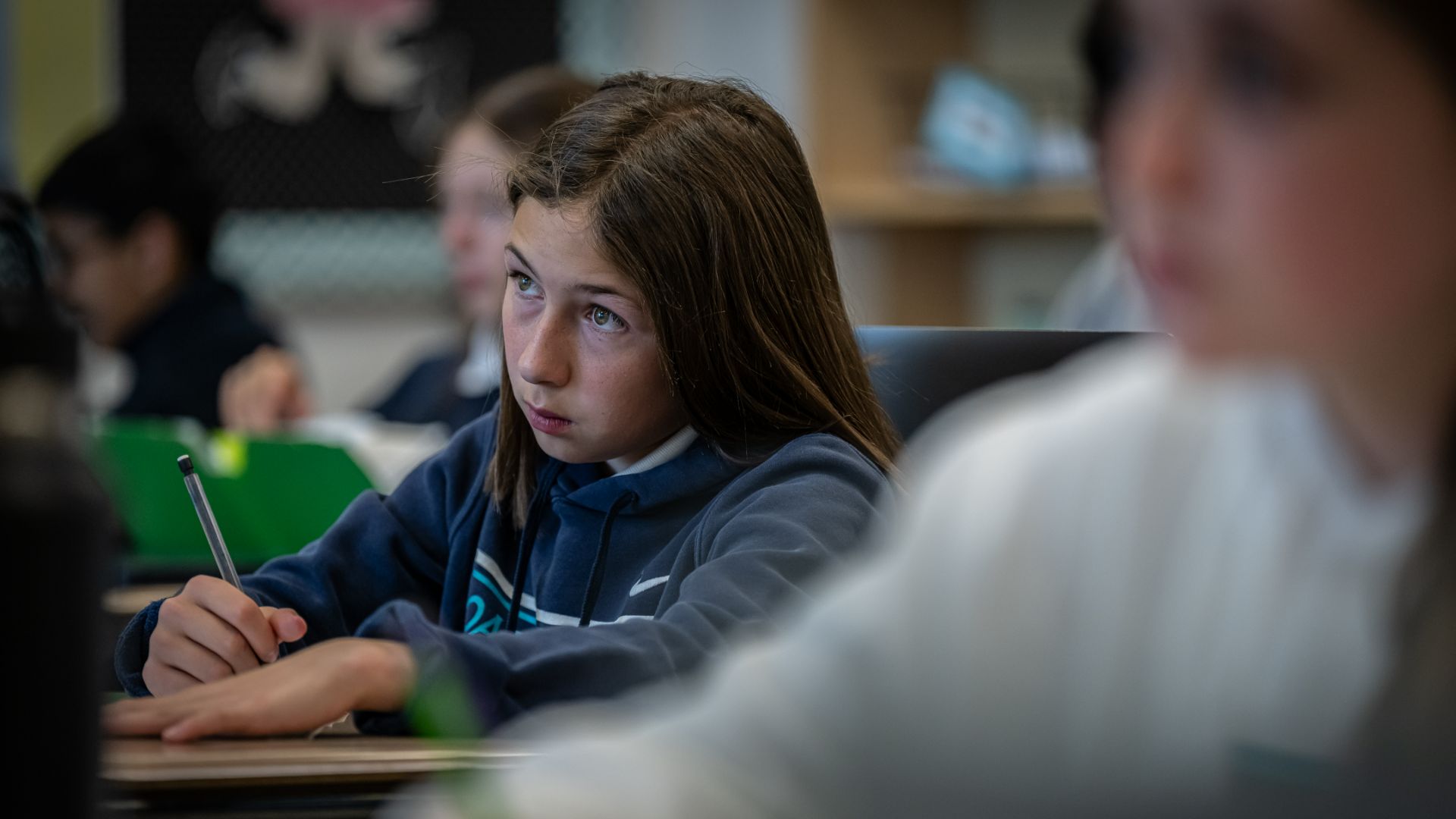
While we base our educational philosophy on the best traditions of the Catholic faith, we believe in including students from throughout our community, from all faiths and backgrounds.